
Introduction
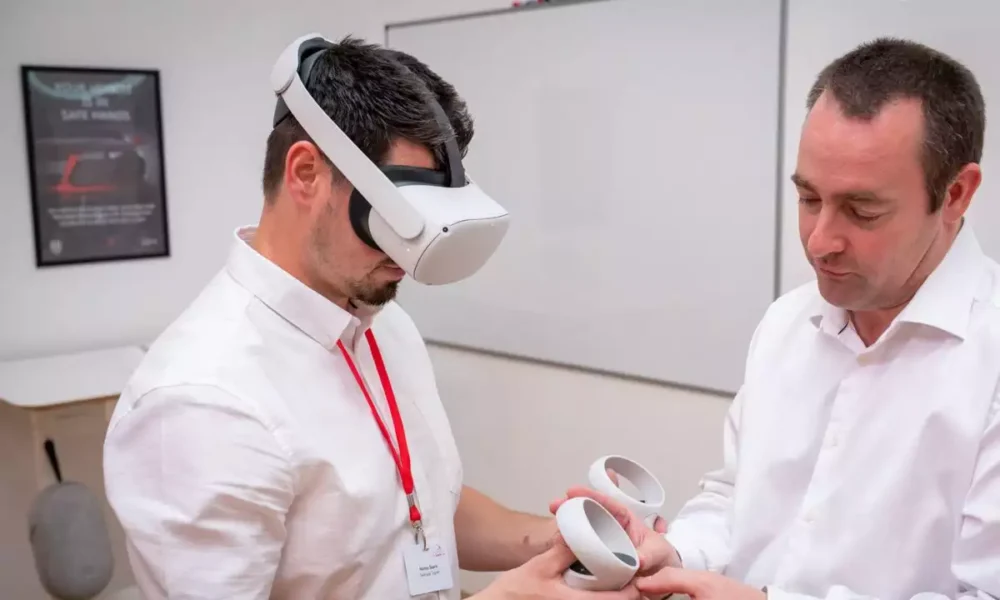
At Our Virtual Academy, we specialise in high‑quality automotive technical training—delivered both online and face‑to‑face. One of the ways we bring training to life is through advanced virtual reality (VR) and mixed reality (MR) headsets, allowing us to simulate real‑world diagnostic and workshop scenarios for learners.
This article highlights the specific headsets we use—particularly those from Meta—and explains why they are ideal for delivering truly effective technical training.
Why VR Headsets Matter in Automotive Training
When training technicians to diagnose and repair vehicles, realism and immersion are key. VR training isn’t just about ticking off assessments—it’s about true knowledge transfer.
Our VR training allows learners to:
– Interact with virtual vehicles and components
– Practice diagnostics and fault‑finding procedures
– Safely simulate high‑voltage EV systems
– Engage in repeatable, hands‑on tasks without workshop downtime
Choosing the right headset ensures accurate tracking, physical comfort, and seamless interaction—all essential for realistic and effective learning.
Headsets We Use in Our Programmes
We’ve tested and implemented a range of headsets, with Meta Quest 3S and Meta Quest 3 proving the most suitable for our needs. These headsets offer:
– High‑resolution displays for clear viewing of schematics and system layouts
– Inside‑out tracking for full mobility without external sensors
– Hand tracking and intuitive controllers for natural interaction with virtual components
– Mixed reality passthrough to blend real‑world training bays with digital overlays
The latest generation headsets allow for highly detailed simulations, such as inspecting hybrid system architecture or walking through EV battery servicing steps.
How We Use VR in Our Training
Here are a few key ways we integrate these headsets into our automotive technical training:
– Scenario‑based learning: Diagnose realistic faults in a virtual vehicle workshop such as equipotential bonding tests and insulation resistance tests.
– Component interaction: Virtually remove, inspect, and reassemble systems like AC-DC converters.
– Mixed reality overlay: Place virtual guidance into real workshop environments for blended learning.
– Performance tracking: Training sessions can be tracked for review, with feedback tailored to each learner’s decisions and actions.
This approach ensures learners gain deep, practical understanding—not just theory or test prep.
Our Edge in Quality and Global Scalability
At Our Virtual Academy, our mission goes beyond certification—we are focused on real skill development. By deploying these advanced VR and MR headsets:
– We offer a standardised training experience across locations
– Our content can be updated or localised quickly to reflect new vehicle systems or regional market needs
– We scale without needing physical workshop space in every location
This is particularly relevant as we expand globally, with a strong focus on markets like China—where EV uptake is booming and skilled technicians are in high demand.
Learn More About Our Approach
If you’re interested in how VR technology can revolutionise automotive training, especially in the EV era, explore our wider training solutions and how we use immersive learning to deliver results.
We believe in training that works. Training that prepares technicians for the real world. And training that’s ethical, scalable, and deeply effective.
To learn more about how we integrate VR into our training, visit our VR automotive training page on our site.


